
Macro research and education
A Big Lesson in Trading: You Do Not Need the Entire Move
Sustainable trading does not require capturing every market move. It requires discipline, risk awareness, and acceptance of uncertain outcomes.
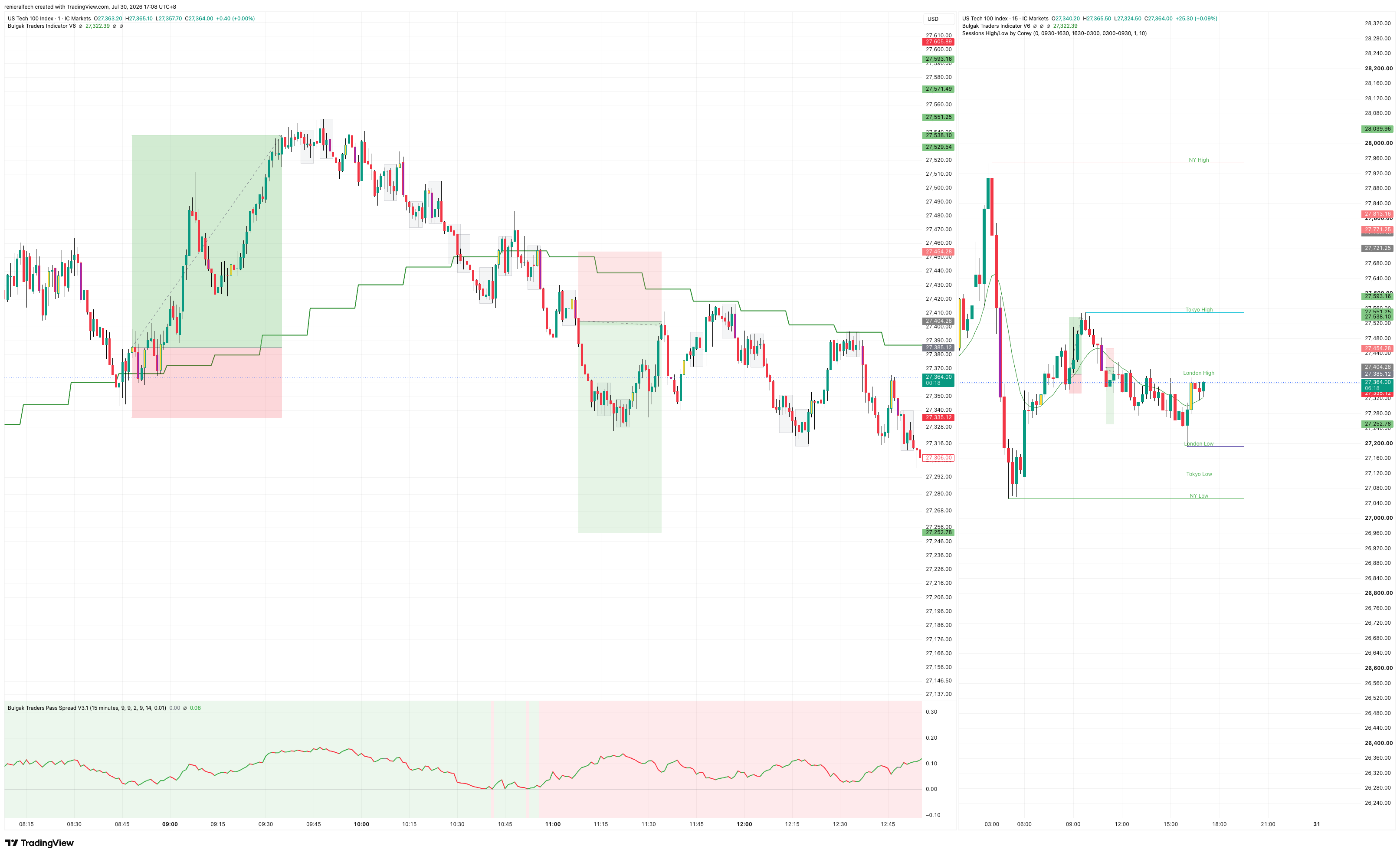
A common misconception in trading is that success requires capturing an entire market move. When a position develops favourably, it can be tempting to imagine how much more might be gained if the move continues. If the market subsequently advances without us, the portion we did not capture may begin to feel like a loss.
It is not a loss.
No trader can consistently identify the exact beginning and end of every move. Markets are influenced by changing economic expectations, liquidity conditions, positioning, news, policy decisions, and human behaviour. Even strong analysis cannot remove that uncertainty.
A more sustainable objective is not to capture everything. It is to follow a defined process consistently enough for a genuine edge—if one exists—to become visible over a sufficiently large body of decisions.
Strong analysis does not create certainty
There will be occasions when macroeconomic evidence appears supportive, the technical structure is clear, and multiple analytical tools point in the same direction. Such alignment can strengthen a research thesis, but it cannot guarantee what happens next.
A sound macro view may be disrupted by an unexpected policy announcement. A technically clean structure may fail after a sudden change in liquidity. A market may even move against apparently supportive evidence because participants had already anticipated that information and positioned themselves accordingly.
Analysis helps traders organise uncertainty. It does not eliminate it.
This distinction is important because excessive confidence often emerges when several forms of evidence agree. The trader may begin treating a well-supported scenario as though it were a known outcome. That can encourage rule changes, excessive exposure, or an unwillingness to accept that the original thesis has weakened.
Confidence should therefore be understood as an assessment of the available evidence—not as a probability of profit and certainly not as a guarantee.
The portion not captured was never owed
Once a market move becomes visible on a completed chart, it looks much easier than it did in real time. The turning points are clear, the direction appears obvious, and the distance between the beginning and end can create the illusion that most of the move was available to anyone paying attention.
That is hindsight.
During the move, the final destination was unknown. At every stage, continuation and reversal remained possible. A trader evaluating the market in real time did not have access to the completed chart that later observers could see.
For this reason, performance should not be judged by comparing an actual result with the maximum theoretical result visible afterward. That standard is impossible to meet consistently. It can also create unnecessary frustration, even when the original decision followed the intended process.
A rules-based strategy will often capture only part of a larger movement. That does not automatically represent a weakness. It may simply reflect the trade-off required to control uncertainty.
Discipline matters more than extracting every point
Greed in trading does not always appear as an obvious demand for enormous profit. It can take subtler forms: repeatedly changing a plan because the market is still moving, treating a reasonable outcome as inadequate, or believing that every remaining point must somehow be captured.
These impulses shift attention away from process and towards an outcome that cannot be controlled.
A trader cannot control whether a market trends, reverses, becomes volatile, or remains range-bound. What can be controlled is the framework used to evaluate evidence, define risk, and respond when conditions change.
This is where discipline matters. Discipline is not the belief that rules will produce a favourable result every time. It is the willingness to apply a tested process even when the next result remains uncertain.
That process should be assessed across a meaningful sample of decisions, not judged solely by one result. A favourable outcome does not automatically prove that the decision was sound, just as an unfavourable outcome does not automatically prove that it was poor.
Losses are part of an uncertain activity
Losses can feel like personal failures, particularly when a trader has invested significant time in research. However, a loss by itself does not reveal whether the analysis or decision-making process was defective.
A well-structured decision can still produce an unfavourable result because markets are probabilistic. Conversely, an undisciplined decision can occasionally produce a favourable result through luck.
The more useful questions concern the process:
- Was the decision consistent with the established framework?
- Was uncertainty acknowledged before exposure was taken?
- Was the evidence interpreted without selectively ignoring conflicting information?
- Did behaviour remain consistent when the market became uncomfortable?
- Was the outcome reviewed without hindsight changing the original facts?
Losses matter because they affect capital and decision-making. They should neither be dismissed nor treated as proof of personal inadequacy. Their value lies in what they reveal over time: whether a framework is behaving within reasonable expectations, whether execution is consistent, and whether changing market conditions may have weakened the assumed edge.
An edge requires repetition, evidence, and review
The phrase “let your edge work” is useful only if the edge has been defined and tested. Confidence in a method should not rest solely on intuition, a short winning period, or a few memorable examples.
A credible edge requires evidence across different market conditions. It also requires continued review because markets evolve. A framework that performed well during a strong trend may behave differently during low volatility, abrupt policy repricing, or unstable liquidity.
Consistency therefore does not mean blindly repeating the same action forever. It means applying a clear process while continuing to evaluate whether its assumptions remain supported.
Useful research questions include:
- What conditions is the framework designed to recognise?
- Under what conditions has it historically struggled?
- Is the current market environment materially different from the testing period?
- Are outcomes being recorded accurately, including losses and rule violations?
- Is the framework being changed because of new evidence or merely because of a recent disappointment?
These questions help separate disciplined adaptation from emotional reaction.
The real objective is durability
Trading is often discussed as though the primary challenge were predicting the next move. Prediction matters, but durability may matter more.
A trader who demands the entire move may repeatedly assume more uncertainty than the strategy was designed to tolerate. A trader who expects to win every time may abandon a reasonable framework after ordinary losses. A trader who treats every missed opportunity as failure may eventually make decisions driven by frustration rather than evidence.
Durability comes from accepting limits: analysis can be strong without being certain; a strategy can be useful without capturing everything; and a disciplined decision can still lose.
The central lesson is simple. Trading does not require perfection. It requires a repeatable process, controlled risk, honest review, and enough discipline to avoid turning uncertainty into a demand for certainty.
The goal is not to prove that every market view is correct. It is to remain consistent long enough to determine whether the underlying process has genuine merit—and humble enough to recognise when the evidence says it must change.
Research support, not a trading instruction
This article is educational and informational research. It does not provide personalised financial advice, a trade signal, or an instruction to buy, sell, hold, short, enter, or exit any position. Market outcomes remain uncertain, and no analytical framework can guarantee profitability. Readers should verify important information, consider their circumstances, and make their own decisions.